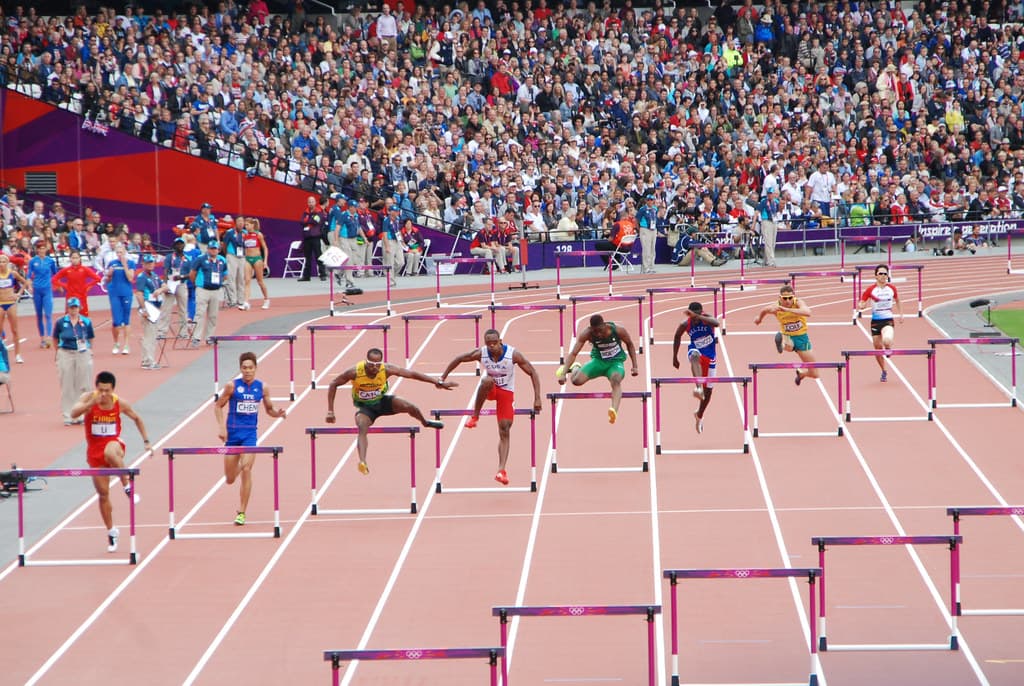
On 12 August 2026, Oskar Edlund (Sweden) ran their 400 metres hurdles in 47.81 seconds at Birmingham (Europe Championships).
On 4h/world, this time earns Oskar a Top 15% World ranking.
This performance is the sweden record.
| 17.16 |
| 9.21 |
13 L |
L |
| H5 | 3.96(+0.16) | 21.12 | 8.84 | 13 L | L |
| H6 | 4.00(+0.04) | 25.12 | 8.75 | 13 L | L |
| H7 | 4.17(+0.17) | 29.29 | 8.39 | 13 L | L |
| H8 | 4.44(+0.27) | 33.73 | 7.88 | 14 R | R |
| H9 | 4.53(+0.09) | 38.26 | 7.73 | 14 L | L |
| H10 | 4.45(-0.08) | 42.71 | 7.87 | 14 R | R |
| Finish | 5.10 | 47.81 | 7.84 | — — | — |
Avg. interval
4.09s
Std. deviation
0.31
Deceleration
Stride pattern
New personal best!
New national record!
Fastest interval: 3.67s (H2–H3).
Excellent fatigue resistance: only 8% speed loss between the first and second halves (8.76 → 8.06 m/s).
Steady stride pattern.
Lead leg alternation: 8× Left, 2× Right.